OAuth Is the New Phishing: Why Login Prompts Aren’t Enough

You’ve probably spent years teaching employees to spot fake login pages. You’ve deployed MFA everywhere. You’ve built entire security programs around the assumption that if you can just protect the password, you protect the data.
That assumption is now obsolete.
Attackers have stopped trying to steal your credentials. They’re asking for permission instead.
The Attack That Doesn’t Look Like an Attack
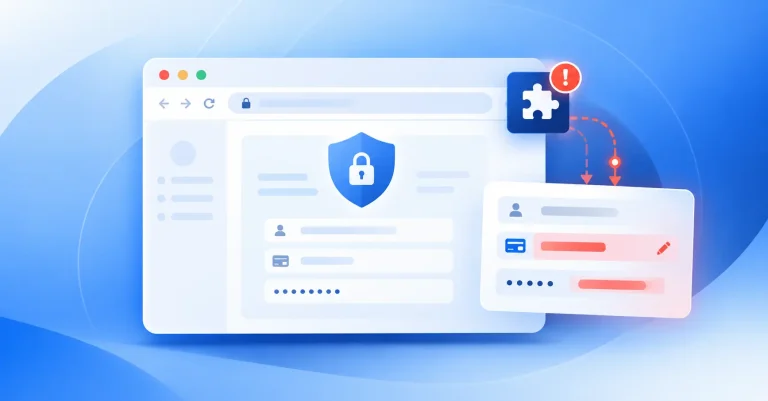
Consent phishing campaigns affected 900 tenants and 3,000 user accounts in 2025. One campaign created 17,000 malicious apps and sent 927,000 messages. These attacks succeeded because they route victims through legitimate Microsoft or Google infrastructure.
The consent screen appears real because it is real. Users see the actual identity provider, not a spoofed page. They’re being asked to grant permissions to what looks like a legitimate application.
Your URL blocklists can’t help you here. The entire compromise occurs over microsoft.com or legitimate Google domains. Traditional phishing filters see nothing suspicious because there’s nothing technically wrong with the request.
Why MFA Doesn’t Matter Anymore
Here’s what makes OAuth abuse fundamentally different from credential theft.
Access tokens obtained through consent phishing persist even after password resets. They remain valid independently of your authentication controls. An attacker who gains OAuth access doesn’t need your password. They don’t need to pass MFA checks. They have a token that grants them direct access to your SaaS data.
The ConsentFix technique takes this further. If you’re already logged into the app in your browser, you don’t even need to supply credentials or pass an MFA check. Attackers just need users to copy and paste. This effectively circumvents phishing-resistant authentication like passkeys.
We’ve built our security programs around protecting the front door. OAuth attacks walk in through the side entrance we left propped open for convenience.
The Scale of the Blind Spot
The average enterprise now uses 342 SaaS applications. Each integration between these applications creates OAuth tokens, API keys, service accounts, and webhooks.
Most organizations have hundreds of OAuth connections. Three quarters of these OAuth apps present some level of risk. Between 60 and 80 percent remain completely unmonitored.
Your security team can’t see what they don’t know exists. OAuth tokens remain valid for months after initial consent. They stay active even after you disable the primary account. Traditional security tools miss this activity because it blends seamlessly into normal SaaS-to-SaaS integration traffic.
The 2025 Salesforce-Drift breach demonstrated the blast radius. Attackers exploited OAuth tokens in a compromised third-party app. The result impacted over 700 enterprises including Google, Palo Alto Networks, and Zscaler through a single compromised integration.
Why Traditional Controls Fail
Most security detection models are built to identify human threats. Suspicious logins. MFA bypass attempts. Unusual access patterns from user accounts.
OAuth attacks don’t trigger these alerts. The activity looks like a trusted application operating within its granted permissions. Security tools aren’t designed to question that trust.
Microsoft is forcing default consent policy changes in July 2025 because the OAuth threat has become serious enough to require intervention at the identity provider level. Users will be unable to consent to third-party applications accessing their files and sites by default.
This platform-level response signals how inadequate our current defenses have become.
What OAuth Governance Actually Requires
You need continuous visibility into every OAuth app, browser extension, and integration touching your SaaS environment. Not a quarterly audit. Not a compliance checkbox. Continuous behavioral monitoring.
Risk scoring becomes essential. You need automated assessment of every third-party app based on permissions requested, data access patterns, and behavioral signals. This enables bulk revocation of high-risk apps before they become incident response exercises.
Automated policies must replace manual reviews. When a new OAuth integration appears, your system should evaluate it against your risk framework and either approve, flag, or block it without waiting for someone to notice.
Integration monitoring needs to track not just what apps are installed, but what they’re actually doing. An app with read-only calendar access that suddenly starts exfiltrating email data should trigger immediate containment.
Organizations that treat OAuth security as a one-time configuration review will continue experiencing compromise. The threat model has shifted from authentication to trust abuse. Your security architecture needs to shift with it.
The Path Forward
We’re not suggesting you block all OAuth integrations. That’s not realistic in cloud-first environments where productivity depends on connected applications.
We’re suggesting you stop assuming OAuth grants are safe by default.
Treat every integration request like privileged access. Maintain a living inventory of OAuth apps and their permissions. Profile third-party apps continuously, not just at installation. Challenge integrations proactively, not reactively after an incident.
The security industry spent a decade making MFA adoption standard practice. Continuous OAuth monitoring needs to follow the same trajectory. It’s becoming table stakes for organizations that operate in SaaS environments.
Your employees will keep clicking consent prompts. The question is whether you’ll have visibility and control when they do.