Point-in-Time Compliance Isn’t Enough: Why Browsers Require Continuous Oversight

- The Mathematical Problem with Quarterly Checks
- What Actually Changes Between Audits
- The OAuth Token Persistence Problem
- Building Continuous Monitoring Architecture
- The First Metric That Never Existed
- Real-Time Data Transformation Without Breaking Workflows
- Building the Audit Trail That Matters
- The Earliest Signal of Compromise
- Moving from Periodic Attestation to Continuous Posture
- References and Further Reading
When organizations run their quarterly browser compliance audits and get a clean report, something important gets missed. The report captures one moment in time. But browser environments change every day between those checks.
Users install new extensions. Publishers push updates that change what their tools do with your data. AI applications proliferate. OAuth permissions expand. The browser you certified as compliant in January operates very differently by March.
In short, the gap between audit cycles has become a structural blind spot.
The Mathematical Problem with Quarterly Checks
Research on browser extension campaigns reveals a timing problem that quarterly audits can’t solve. When extensions turn malicious through updates, they stay dangerous for an average of 98 days before patches arrive.
A 90-day audit cadence is mathematically aligned with never seeing the problem on a scheduled report.
Organizations pass compliance while backdoors operate the entire time between checks. The RedDirection campaign demonstrated this perfectly. Extensions like Adblock Unlimited and Image Downloader behaved legitimately for long periods, gathered high install counts and positive reviews, then pushed weaponized updates that added tracking and surveillance capabilities.
These extensions had already passed earlier compliance reviews. The risk arrived later through automatic updates, without fresh enterprise vetting.
What Actually Changes Between Audits
The scale of browser activity between quarterly checks is larger than most compliance programs account for. Studies show that 99% of employees have at least one browser extension installed, and 52% have more than 10 extensions.
More than half of enterprise users run extensions with high or critical permission levels. These tools can access cookies, passwords, web page contents, and browsing information.
In 90 days, users churn extensions constantly. They add productivity tools, install AI assistants, remove unused plugins, and accept permission updates without reading them. Marketplaces add new offerings daily. Publishers ship version updates that fundamentally alter data flows.
Point-in-time audits capture none of this operational reality. They show which extensions existed on audit day. They say nothing about what users do in browsers tomorrow, or how often sensitive data attempts to reach risky destinations between checks.
The OAuth Token Persistence Problem
Browser compliance intersects with another dynamic surface: third-party application integrations. Unlike user sessions, OAuth tokens often don’t expire, creating long-term exposure that quarterly reviews miss entirely.
The Salesloft-Drift incident showed how this plays out. The initial compromise of Drift created a beachhead. OAuth tokens enabled lateral movement. Interconnected scopes multiplied the blast radius to 700+ organizations.
Every enterprise has dozens of orphaned OAuth applications. They were authorized by departed employees, created by vendors that no longer exist, granted permissions for projects that ended years ago. These create persistent attack surfaces nobody monitors between audit cycles.
When you split browser security and SaaS compliance into separate workstreams with different tools, you lose a single, provable story of how regulated data is protected end-to-end. Browser teams can show extension controls. SaaS teams can show access policies. But no one can demonstrate that the same data protection rules fire consistently from the user’s click in the browser through to the SaaS action and back.
Building Continuous Monitoring Architecture
The shift from periodic checks to continuous oversight requires both technical infrastructure and organizational alignment. We’ve implemented this across enterprise environments, and the architecture follows a consistent pattern.
Start with lightweight sensing at the edge. Browser-based sensors run fast, local checks on which extensions are active, which domains are open, what permissions are being exercised, and whether content matches sensitive patterns. These sensors send compact event metadata to a central platform, not full payloads.
Build behavioral baselines per extension and app, not per user. The system learns typical domains, SaaS applications, permissions actually used, call volumes, and external endpoints over time. This creates profiles that make detecting changes a simple comparison, not a full re-analysis for every event.
Aggregate signals hierarchically to avoid alert fatigue. When a new malicious pattern appears across many users, it becomes one high-confidence incident rather than thousands of low-value alerts. Policies can require multiple signals before action, which dramatically reduces noise compared to single-signal systems.
Route most detections through automated guardrails instead of human alerts. The system auto-contains in high-risk contexts, downgrades capabilities, or moves an extension into watch state. It only escalates to humans when impact or uncertainty crosses defined thresholds.
This architecture lets you monitor thousands of extensions and integrations in real time while keeping browser performance intact and surfacing a small, prioritized set of issues that actually matter.
The First Metric That Never Existed
When organizations consolidate browser and SaaS security into one platform, they immediately notice visibility they’ve been missing. They can finally answer: “How often are users actually trying to move sensitive data to risky tools in the browser, and what happened each time?”
They see the count of attempted PHI, PII, and regulated data events that started in a browser session and flowed into SaaS. They see whether each attempt was blocked, contained, de-identified, or allowed under policy.
This translates into concrete KPIs that traditional compliance programs can’t produce: risky extension decisions completed, PHI attempts to unapproved AI tools blocked, time from risky browser action to SaaS containment.
These metrics prove controls work in operational reality, not just in policy documents.
Real-Time Data Transformation Without Breaking Workflows
Continuous monitoring becomes more effective when it can transform risky actions instead of just blocking them. When a user pastes customer data into an AI tool, the system can intercept the action, rewrite the sensitive parts of the payload, and let the request go through.
The tool still works. What it sees is a masked version of the data.
A browser DLP sensor watches text and file flows into specific fields and frames. It runs AI-based classification on content in real time to identify PHI, PII, card data, and account identifiers. This happens locally and fast, before content is sent to third-party endpoints.
For flows allowed with masking, the system replaces detected entities with safe placeholders. Real names become synthetic names. Account numbers become tokenized values. Emails get hashed. The structure of the input is preserved so the AI tool can still generate useful output without ever seeing true identifiers.
From the user’s perspective, the paste works. The prompt appears. The AI responds. The workflow continues. The only difference is that what left the browser was a sanitized version of what they typed.
Building the Audit Trail That Matters
Every transformation creates a logged event showing timestamp, user, source app, destination tool, data classification detected, and the policy decision applied. When the browser shows a user “we masked customer identifiers,” that same event is written centrally with full context.
You can later demonstrate: “On these 127 attempts to send PHI to unapproved AI tools, the system de-identified data per policy, and no raw identifiers left the environment.”
Auditors can review sampled events, associated policies, and tokenized artifacts to verify that de-identification was systematic and enforced in real workflows. This is evidence that controls are not only configured but actively applied at the point of action.
The in-browser message makes the policy explicit when it matters most. This helps demonstrate to auditors that users are being informed of rules and that enforcement is tied to specific regulatory obligations, not arbitrary IT decisions.
The Earliest Signal of Compromise
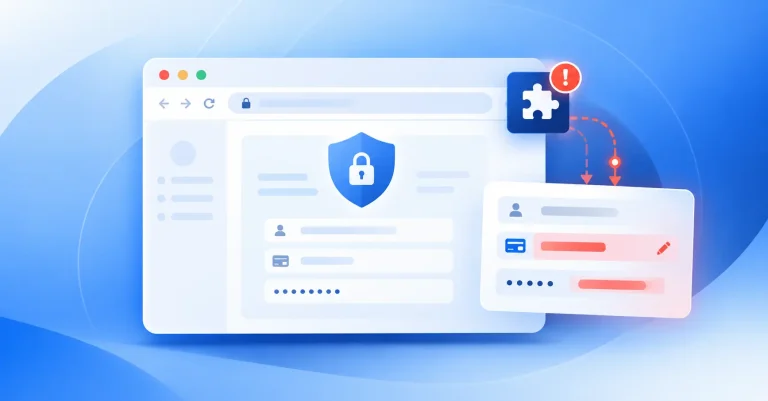
The most dangerous blind spot in quarterly audits is silent changes in third-party code between checks. Browser extensions and integrations that auto-update or change ownership can start exfiltrating SaaS data while everything still looks compliant on paper.
Continuous sensing detects this before data actually leaves. The earliest reliable signal is a behavior change that doesn’t match the extension’s or app’s past activity or stated purpose.
For browser extensions, you see new kinds of actions. The extension starts reading content on SaaS pages it never touched before. It injects scripts or modifies elements in sensitive apps where it previously only ran on generic sites. It calls out to new domains or increases background traffic volume without any change in user behavior.
For OAuth integrations, the signals are scope and usage anomalies. An app suddenly exercises permissions it has never used. It starts reading all mailboxes after months of only reading calendars. API calls spike or expand into new object types that aren’t tied to any known business change.
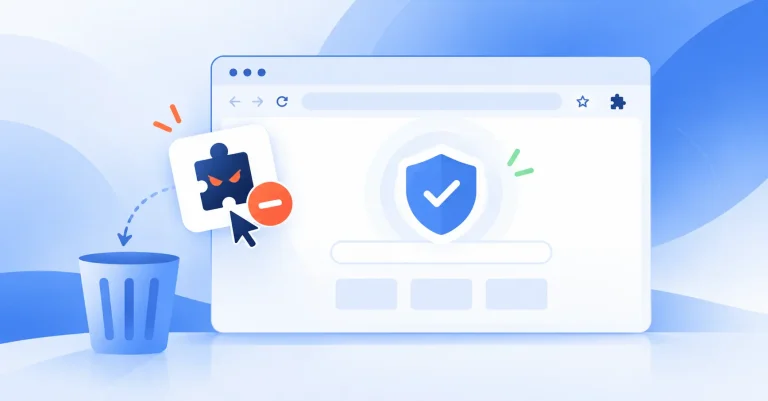
A sensing system flags these patterns and lets you quarantine or down-scope the tool before a large exfiltration event occurs.
Moving from Periodic Attestation to Continuous Posture
The assumption behind periodic checks is that risk stays mostly static between audits. Browser and SaaS supply-chain risk behaves more like a live stream than a snapshot. Permissions, ownership, and behavior can change weekly via silent updates, marketplace changes, and new features.
Compliance can no longer be built purely on point-in-time attestations. You need continuous sensing at the browser and integration layer, or you’re certifying yesterday’s state while today’s extensions and OAuth apps quietly rewrite your real risk surface.
Organizations that make this shift report a fundamental change in how they think about compliance. It stops being a quarterly event and becomes an operational capability. Security teams move from reactive investigation to proactive containment. Audit preparation shifts from evidence gathering to evidence streaming.
The browser has become the operating system for modern work. It’s where AI-driven workflows happen, where SaaS applications run, where sensitive data moves between systems. Treating it as a static configuration that you check four times a year no longer matches the environment you’re actually trying to protect.
Build continuous monitoring into your browser security architecture. Consolidate it with your SaaS security controls. Create the unified audit trail that proves your policies work in real time, not just on scheduled review days.
The gap between quarterly audits has become too large to ignore.
References and Further Reading
Browser Extension Security Research
- Barracuda Networks. “Hidden Cybersecurity Risk: Browser Extensions.” February 25, 2026.
https://blog.barracuda.com/2026/02/25/hidden-cybersecurity-risk-browser-extensions - The Hacker News. “Chrome Extension Turns Malicious After Update.” March 2026.
https://thehackernews.com/2026/03/chrome-extension-turns-malicious-after.html
Browser Extension Usage Statistics
- About Chromebooks. “Unused Chrome Extension Statistics 2026.”
https://www.aboutchromebooks.com/unused-chrome-extension-statistics-2026/
Related Resources from Spin.AI
- Understanding Browser Extension Risks. Comprehensive guide to assessing and managing browser extension security in enterprise environments.
https://resources.spin.ai/hubfs/Understanding_Browser_Extension_Risks_Guide.pdf - AI Compliance and Browser Extension Risks in 2025. Analysis of emerging threats from AI-powered browser extensions.
https://spin.ai/ai-compliance-and-browser-extension-risks-in-2025/ - Spin.AI Research: Malicious Extensions Attack 14M Users. Original research on the RedDirection campaign and enterprise impact.
https://spin.ai/news/spinai-research-malicious-extensions-attack-14m-users/ - Browser Compliance Sensor. Technical overview of continuous browser monitoring architecture.
https://spin.ai/blog/browser-compliance-sensor/ - Why SaaS Compliance Preparation Takes Months and How Automation Fixes It.
https://spin.ai/blog/why-saas-compliance-preparation-takes-months-and-how-automation-fixes-it/ - Enterprise Browser Security Platform. Overview of SpinCRX capabilities and architecture.
https://spin.ai/platform/enterprise-browser-security/ - Risk Assessment for Apps and Extensions in Google Workspace.
https://spin.ai/help/gworkspace-security/risk-assessment-for-apps-extensions/ - Spin.AI Launches SpinCRX: Next-Generation Browser Security.
https://spin.ai/news/spin-ai-launches-spincrx/ - Browser Security and SSPM Integration.
https://spin.ai/blog/sspm/browser-security/ - SpinOne: Unified SaaS Security Platform.
https://spin.ai/platform/spinone/ - The Complete Guide to App Risk Assessment.
https://spin.ai/blog/the-complete-guide-to-app-risk-assessment/ - Multi-SaaS Security That Works.
https://spin.ai/blog/multi-saas-security-that-works/ - AI-Native DLP for SaaS: From Policies to Autonomous Guardrails.
https://spin.ai/blog/ai-native-dlp-for-saas-from-policies-to-autonomous-guardrails/ - Traditional DLP and PHI in SaaS Environments.
https://spin.ai/blog/traditional-dlp-phi-saas/ - Manual SaaS DLP Is Dead in the GenAI Era.
https://spin.ai/blog/manual-saas-dlp-dead-genai-era/ - Manual SaaS DLP and AI Automation.
https://spin.ai/blog/manual-saas-dlp-ai-automation/ - Data Loss Prevention Best Practices for the Cloud: Complete Guide.
https://spin.ai/blog/data-loss-prevention-best-practices-for-the-cloud-complete-guide/ - Data Loss Prevention Solutions.
https://spin.ai/solutions/data-loss-prevention/ - Compliance Resources and Guides.
https://spin.ai/blog/compliance/ - Navigating AI Compliance: Should Employees Be Permitted to Install AI Tools?
https://spin.ai/blog/navigating-ai-compliance-should-employees-be-permitted-to-install-ai-tools/ - From Convenience to Catastrophe: The Real Cost of Unchecked Browser Extensions.
https://spin.ai/blog/from-convenience-to-catastrophe-the-real-cost-of-unchecked-browser-extensions/ - AI DLP Alert Prioritization.
https://spin.ai/blog/ai-dlp-alert-prioritization/ - Dangerous Browser Extensions Tracker. Real-time database of identified high-risk extensions.
https://spin.ai/resources/dangerous-browser-extensions-tracker/ - DLP Alert Fatigue and AI Prioritization.
https://spin.ai/blog/dlp-alert-fatigue-ai-prioritization/ - SaaS Data Loss Visibility Crisis.
https://spin.ai/blog/saas-data-loss-visibility-crisis/ - Continuous Monitoring Isn’t Optional in Healthcare and Fintech SaaS Security.
https://spin.ai/blog/continuous-monitoring-isnt-optional-in-healthcare-and-fintech-saas-security/
Additional Industry Resources
- Security Boulevard. “The Chrome Extension Backdoor: How Productivity Tools Became Enterprise Attack Vectors.” March 2026.
https://securityboulevard.com/2026/03/the-chrome-extension-backdoor-how-productivity-tools-became-enterprise-attack-vectors/ - Bleeping Computer. “2026 Browser Data Reveals Major Enterprise Security Blind Spots.”
https://www.bleepingcomputer.com/news/security/2026-browser-data-reveals-major-enterprise-security-blind-spots/ - CSO Online. “Five Chrome Extensions Caught Hijacking Enterprise Sessions.”
https://www.csoonline.com/article/4118607/five-chrome-extensions-caught-hijacking-enterprise-sessions.html - Paubox. “What Makes Malicious Chrome Extensions Hard to Detect.”
https://www.paubox.com/blog/what-makes-malicious-chrome-extensions-hard-to-detect - The Hacker News. “SaaS Breaches Start with Tokens: What You Need to Know.” October 2025.
https://thehackernews.com/2025/10/saas-breaches-start-with-tokens-what.html - CrowdStrike. “Continuous Monitoring in Cybersecurity.”
https://www.crowdstrike.com/en-us/cybersecurity-101/next-gen-siem/continuous-monitoring/ - Google Workspace Marketplace. “SpinOne: SaaS Security for Google Workspace.”
https://workspace.google.com/marketplace/app/spinone_saas_security_for_google_works/829029953048